Star Wars Droids, Amstrad, Mastertronic / MAD - ISA 0261
-
Score - 2.5/102.5/10
Summary
Just like the Commodore 64 release, the Amstrad CPC version of Star Wars: Droids should have been a fun blend of puzzle and arcade exploration but instead it’s hampered by awful controls and poor collision detection throughout. Despite making genuinely good use of the Star Wars license, it’s cumbersome to control, leaving to frustration at every turn. Even die-hard Star Wars fans will be disappointed with this one.
User Review
( votes)Born in 1971 I guess I was pretty lucky. As a gamer I saw the industry grow right from the beginning so I was there to see the likes of Space Invaders and Pac Man and all the classics when they were first released. And thanks to my mom my love of sci-fi was nutured from re-runs of Star Trek, watching Doctor Who on TV every week and getting to see the first Star Wars movie in the cinema when it was first released. Seeing that Star Destroyer fly overhead at the beginning was mind-blowing for a six year old, I tell you! So it’s no surprise that I was eager to get my hands Star Wars: Droids based on the 1985 animated spin-off series from the franchise…
Stuck In A Rut
Truthfully, Star Wars was struggling creatively on screen (we did have comics and novels but nothing considered to be “mainstream”) after the release of Return Of The Jedi in 1983 and the franchise entered something of a slump. While fans were generally aware that plans had been made for 9 movies in the series, it was felt that the saga had come to an end after the three that had been released. With a poorly received failed TV movie featuring the Ewoks in 1984 it seemed as if there wasn’t really anything else to come for the majority of fans. Then 1985 happened…
A second Ewok TV movie arrived along with not one but TWO animated spin-offs. Ewoks (again aiming to cash in on the children’s market knowing how popular the furry aliens were amongst them) and Star Wars: Droids focusing on R2-D2 and C-3PO. The latter show seeing the return of Anthony Daniels in his now legendary role. Neither were Lucasfilm’s first attempt at an animated version of Star Wars – that dubious honour went to Boba Fett who appeared in a short that was included in the infamous 1978 Star Wars Holiday Special. But at the time this was the best we were going to get.
Instead of continuing where Return Of The Jedi left off, Droids took the unusual approach of setting the series before the Star Wars: A New Hope so we got to see the droids moving from one owner to another, on various escapades around the Star Wars universe.
These Aren’t The Star Wars Droids You’re Looking For
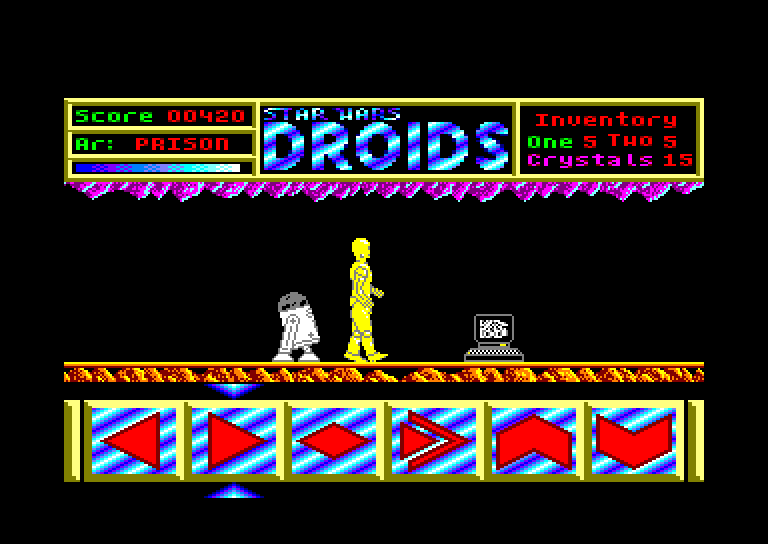
History aside, what’s the game all about? While on one of their adventures, our heroic droids encounter the Fromm gang. They’ve just escaped from a high security prison on the planet Ingo and managed to steal an A-Wing fighter from the Rebellion and escaped to the nearby moon of Auren. The droids, landing nearby when their shuttlepod crashes, are captured by the gang and find themselves swiftly imprisoned by the gang deep beneath the surface in their hideout.
R2 has managed to bypass the lock to your cell (and the prison conveniently having a droid-compatible control panel on the inside!) and now it’s your job to guide R2 and 3PO back to the surface, navigating the underground complex using C-3PO’s wits and R2-D2’s technical wizardry where rescue awaits.
Race For Freedom
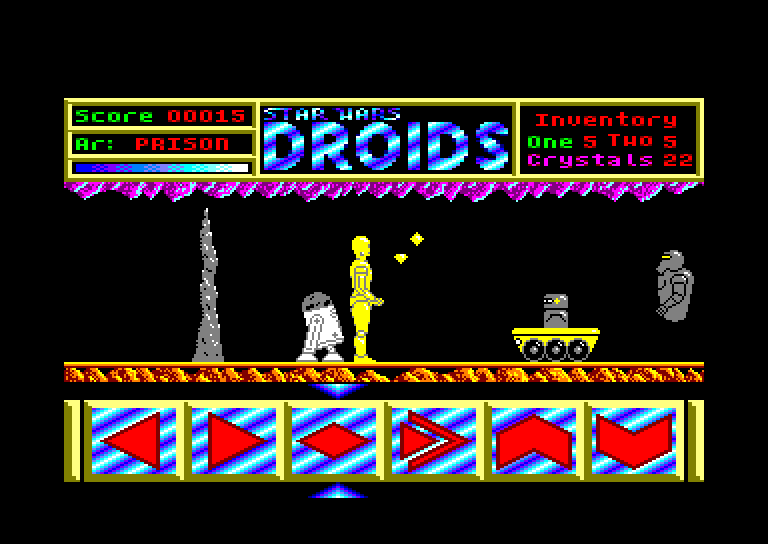
To escape you have to avoid all of the droids that patrol the complex, make your way up through the maze of corridors and lifts, each of which is protected by a series of security locks that only R2-D2 can access. Some need pass keys to use properly and these are dropped behind by the security droids that can be destroyed by C-3PO throwing crystals at them (no, that didn’t make sense to me either considering his non-violent nature). You start off with a limited amount but can collect more as you progress. You also have a set amount of energy and this is depleted as you collide with any droid or energy barrier (which again can be disabled thanks to R2) but when this runs out it’s game over.
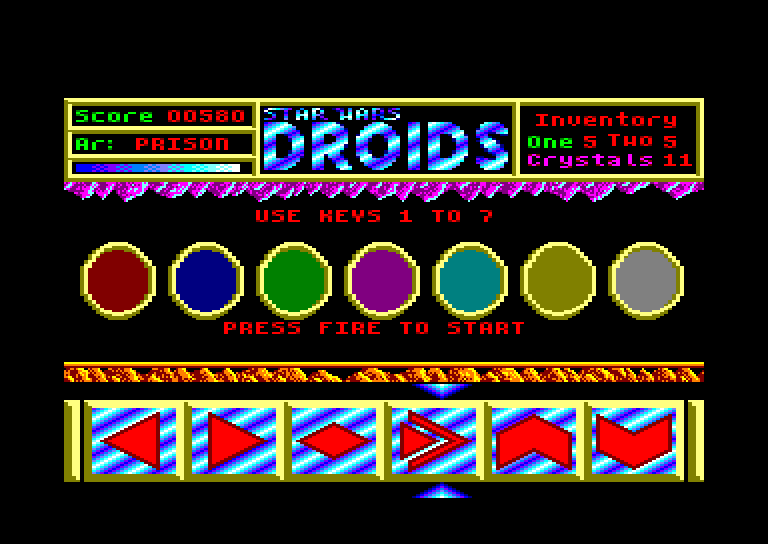
Accessing the locks for the lifts, sealed doors and energy barriers takes you to a sub-game based on the classic electronic game Simon. A row of coloured circles appear on screen and just click on each one to match the pattern that is displayed. There’s no limit to the number of times you can try each puzzle but they get progressively harder the further up you go in the complex.
Playing this sub game is simplicity itself. On screen you’re presented with a row of seven lights and they flash in turn, with the sequence growing longer until you complete the code. To select them, just press the number 1-7 on the keyboard to match the corresponding light. While the rest of the game is joystick controlled, this works extremely well using the keyboard and is far better than the Commodore 64 version I played previously.
R2-D2 And C-3PO – Not Such An Icon-ic Duo
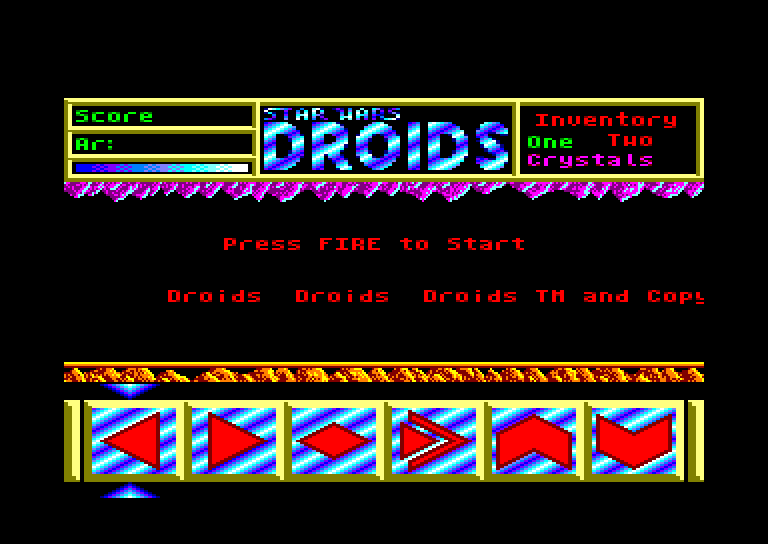
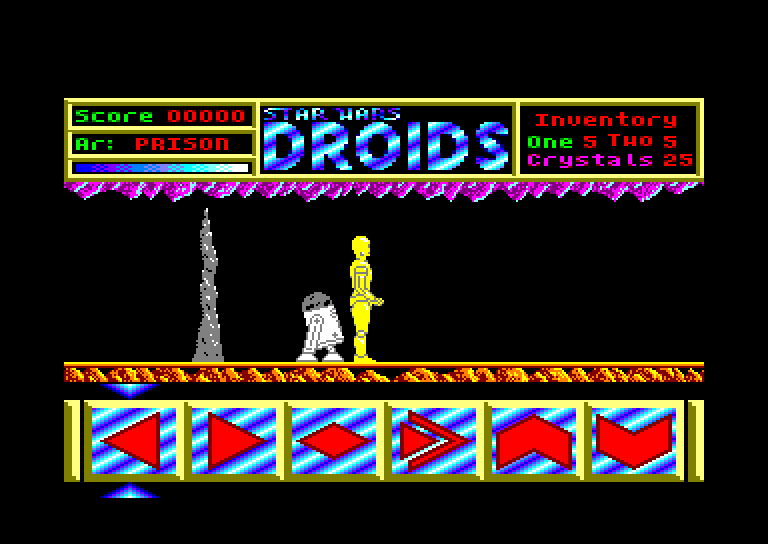
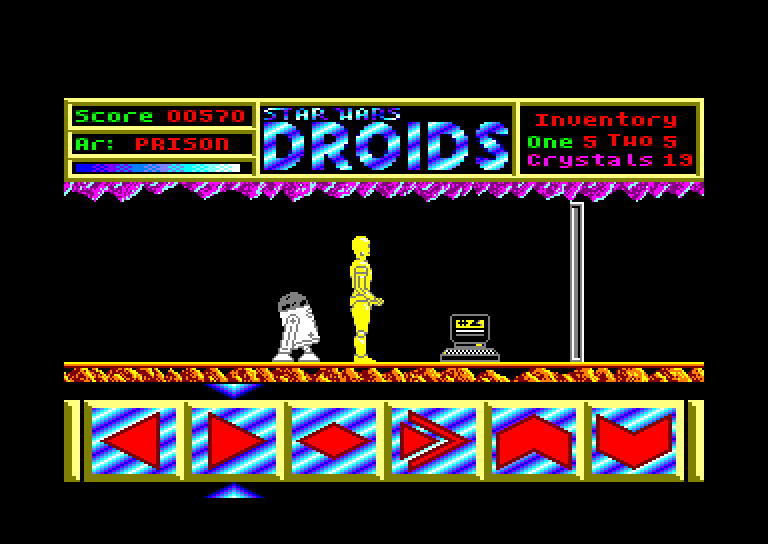
It has to be said that Star Wars: Droids isn’t the greatest game to bear the Star Wars moniker, but there’s one creative decision that was taken by the developers that took it from being an above average game to being one that you’re fighting against all the time and one that makes you feel like rage-quitting more often than not. And that single issue is with the way you control it and looking at the screenshots here, I’m sure you can figure out what that is…
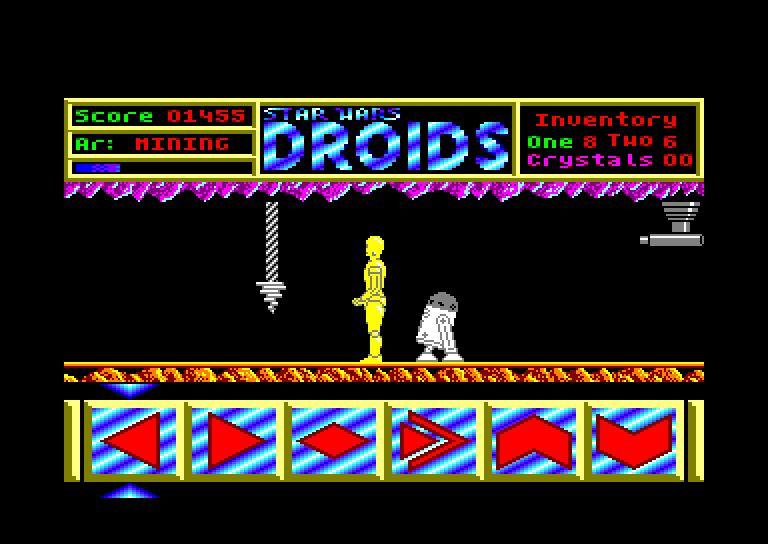
The game takes a side-on view and you would think that using the joystick to move left/right, up to enter the lifts, down to duck and fire to either shoot or to access a terminal would be simple enough. But no… the developers decided to opt for an icon based control system. You still use the joystick but this controls a cursor that allows to to choose the direction you move, firing, accessing the computer terminals, and so on. Moving left and right on the joystick moves the cursor from one icon to the other and fire selects the one you want to activate, but this control method makes playing the game incredibly clunky and you end up losing energy far more than you need to in a game that relies on quick reactions throughout.
What I found quite strange here is that even though this icon system worked slightly differently to the Commodore 64 version (here the cursor jumps from icon to icon instantly, where the C64 versions cursor moves so there are gaps where it doesn’t touch anything), it feels less responsive on the Amstrad where it should be the opposite.
Playability
And that’s the biggest issue with Star Wars: Droids if I am completely honest. There is a genuinely entertaining and challenging game here, especially the puzzle segments and while it’s not going to win any awards for gameplay it has the potential to be an enjoyable romp. But it’s let down by it’s horrendous control system and that makes the game incredibly cumbersome right from the beginning.
While you can get used to it after a short while, you shouldn’t have to and you’ll still spend far too much time fighting against the controls and losing energy from contact with the other robots and creatures patrolling the complex – which isn’t helped from the poor collision detection – when you don’t need to. A game like this desperately needs rapid and responsive controls and they’re just not there and it really takes away the potential that this has.
Graphics and Sound
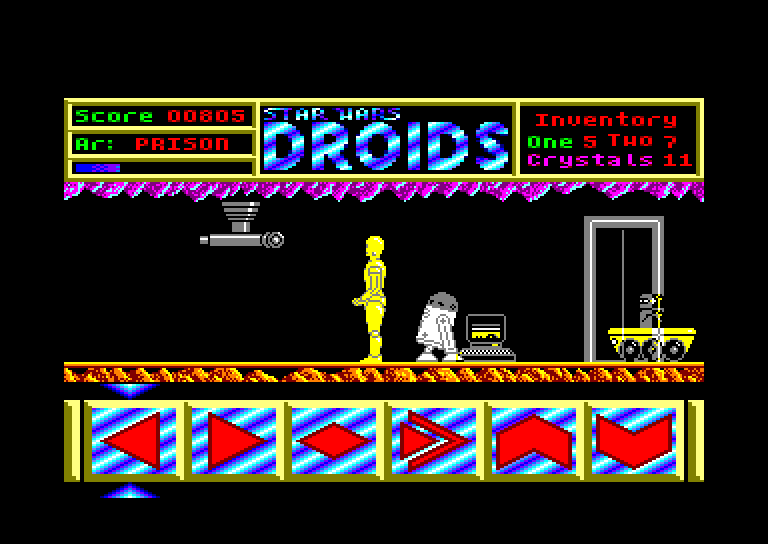
On a visual from, this is fairly basic. Both droids are somewhat chunky side and only uses a couple of colours each although they are reasonably well animated. The backgrounds are rather bland though, lacking in detail and there’s nothing apart from the occasional obstacle, computer terminal or lift. There are small rock formations at the top and bottom and these are the only things that give you any sense that you are moving along corridors as they scroll as you walk and the colour palettes of these change depending on the floor you are on, but apart from that the screen is left blank.
The bulk of the screen is taken up with the status panel at the top and the icons which are quite bold and well defined but they’re in stark contrast to the bland nature of the game itself.
Sound on the other hand is quite limited. There is music on the title screen which is conversion of the TV show’s end theme. Originally co-written by Stewart Copeland (formerly of The Police), this has been adapted extremely well to the AY chip by Tony Williams and while it’s quite short and repetitive, so was the original so it can’t be faulted for that.
Apart from the music, there is little in-game sound apart from the odd sparse sound effect and frankly I found this to be quite a disappointment.
Overall
Star Wars: Droids displayed a fair amount of potential, both on paper and when you first start playing it… or at least for the first few seconds. The premise certainly seemed to fit well with both the animated series and the characters themselves and the blend of exploration and puzzles should have worked really well. But it’s the shoddy control interface and sloppy collision detection that let the game down. It’s unresponsive at best, and at worst leaves you almost completely unable to get the game to do what you need it to do when you need to.
For something that relies on quick reflexes and features action elements, the last thing it needs is to be icon based and that’s what ruins this completely. I could have forgiven the collision detection issues otherwise and it could have still been a decent budget game but instead it’s one to be avoided completely.
* * *
You know what we think but why not share your thoughts on this game! Let us know what you think of it in the comments below, or add your own score using the slider in the summary box at the top of the review!


We did not get the Droids cartoon until 1987 so the game was released in the UK