
Spy Trek Adventure, Amstrad, Americana
-
Score - 6.5/106.5/10
Summary
Spy Trek Adventure on the Amstrad may be filled with all the usual espionage clichés you’d expect from a James Bond movie – fake identities, disguises, secret plans, a mission travelling the globe – but it still proves to be a fun and challenging adventure. Yes, it was developed using the Graphic Adventure Creator, but that doesn’t stop it from being a worthwhile budget purchase.
User Review
( votes)Most of the games released on the Americana label were re-releases – licensed titles, arcade conversions or games first published by American companies. Spy Trek Adventure, however, is one of a small number of original releases on the label and as the title implies is a text adventure. Released on three systems – Commodore 64, ZX Spectrum and Amstrad – so I took a look at the CPC release…
Spy Trek Adventure – The Story Begins
If you haven’t guessed by the title, you’re a secret agent. Forget the glamour you’d associate with the likes of James Bond though. You’re (allegedly) one of the government’s top agents and you’ve been called upon to retrieve some “secret plans” that are somewhere in Europe. Your mission is to find and retrieve the plans and bring them back home.
It’s not going to be as easy as you think though, as your predecessor met an untimely end while trying to bring the plans back. He’s left clues for you but are you willing to put your life on the line for your country?
Getting Started
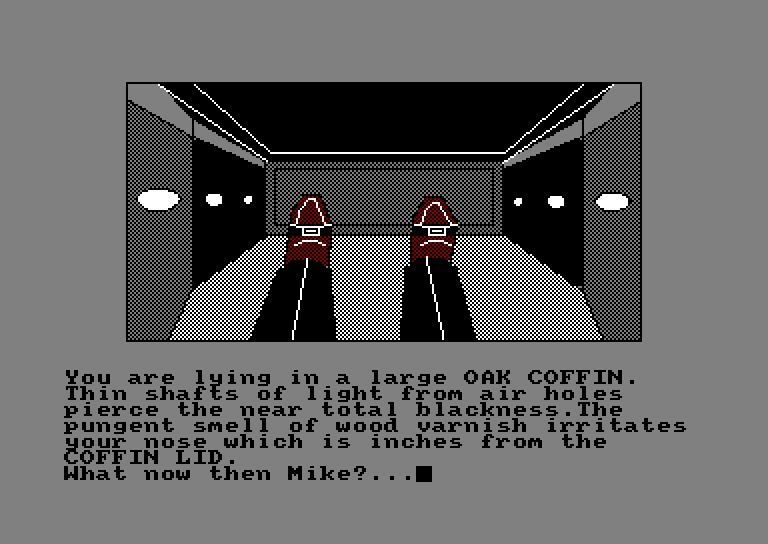
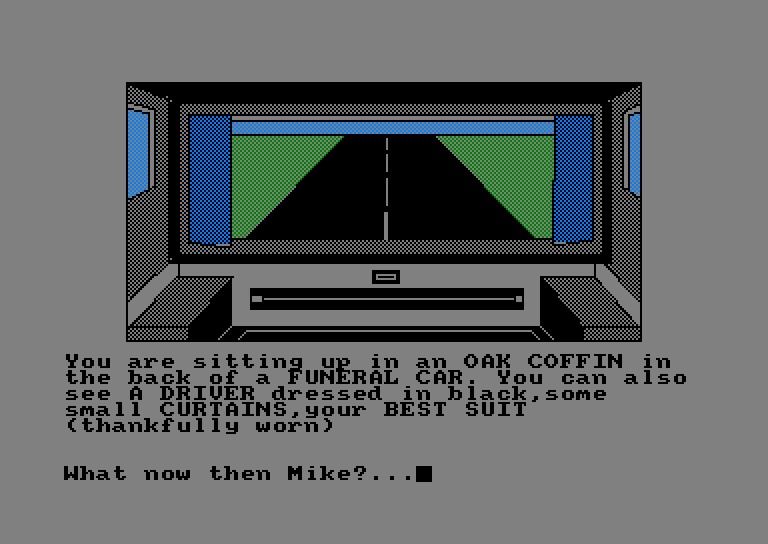
You’re already being pursued so your death has been faked. Kicking the game off, you find yourself alive, but inside a closed coffin and you’ve got to find a way out. It’s a fairly simple puzzle to be honest, but once you’ve figured that out you discover that you’re in the back of a hearse on the way to a secret location, and you’ve been given a new identity – Mike Rodot (say it quickly).
From there, it’s standard text adventure fare, exploring your surroundings, examining everything you find and moving your way through the locations in your hunt for the secret plans.
That Looks Familiar
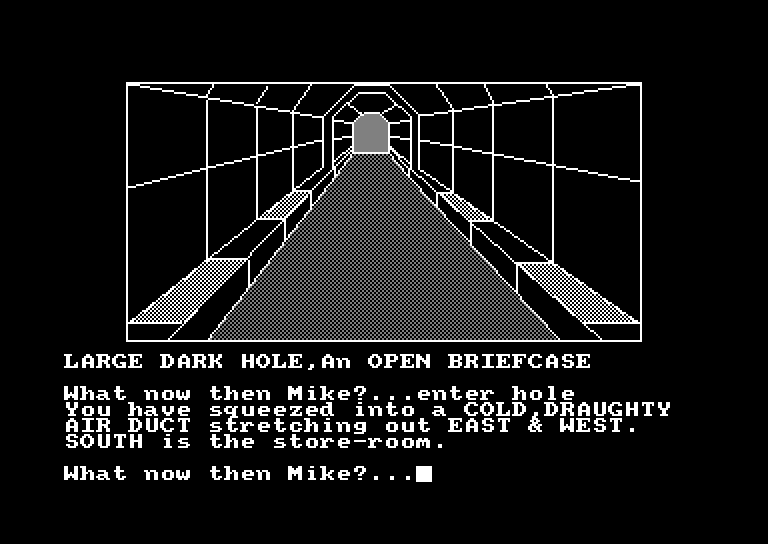
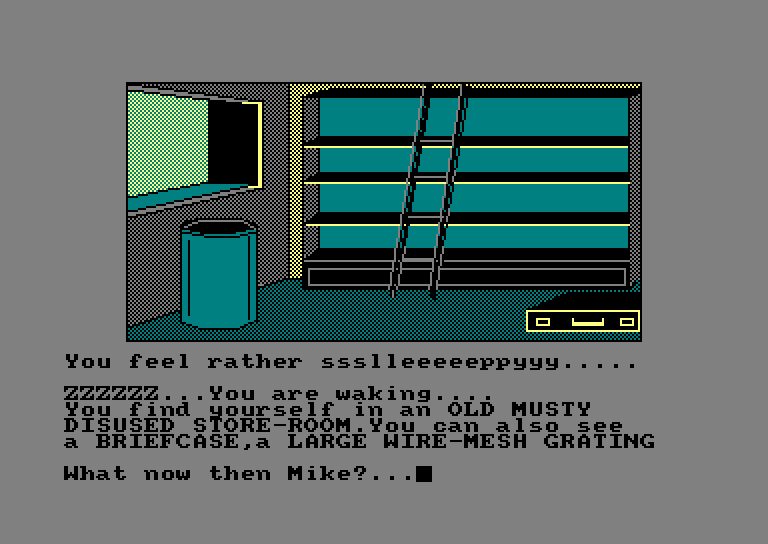
For those of you who are avid adventure enthusiasts, the screen layout and visual style used for Spy Trek Adventure may seem rather familiar. And you’d be right as the author Peter Torrance produced the game using Incentive Software’s popular adventure development tool The Graphic Adventure Creator. Using that does give everything a certain look and feel – as it did for his other titles Subsunk and Seabase Delta – but it took away the hard part of adventure creation allowing people to focus on writing and puzzle development rather than worrying about the coding.
While there are those that are dismissive of adventures produced with packages like GAC, The Quill and so on, it is an incredibly powerful piece of software and capable of creating some complex adventures and has a great deal of scope in terms of what it can offer to both the author and the player.
Getting Interactive
One advantange I found as a player with games designed using the Graphic Adventure Creator is that the descriptions for each location not only mention the location name in UPPER CASE (making mapping much easier), but also the key items that you can interact with as well. This may seem like a minor thing, but when it comes to trying to figure out puzzles, you don’t have to think about what items to look for or use.
The parser is also more complicated than you might expect, allowing multiple commands to be entered at once and while it’s not quite on the level of Infocom’s parser it’s impressive for an adventure creation tool. The only thing I did find disappointing was the lack of some of the commonly used abbreviations found in other adventures.
But I Can See It…
I talked about the locations and objects being mentioned in UPPER CASE and this is something that you definitely need to bear in mind while playing Spy Trek Adventure. There are a few instances where you’ll come across locations where the descriptions will mention things that you can see but you can’t interact with them.
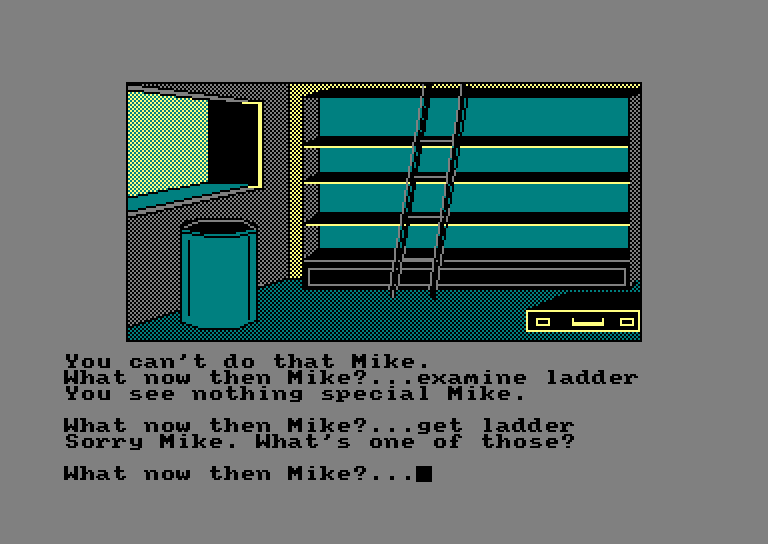
Or even worse, early on in the game you find yourself in a storeroom and while you are told a few objects are visible, the illustration also shows a wastebin and a ladder up against a wall. You can examine both and are told that you don’t see anything special, but if you try to take them the game doesn’t recognise that they exist.
This is really a combination of two problems. First, the graphics themselves have been designed with items that are not physically present in the game to be interacted with. Secondly, if something isn’t on the object list then the player should be told that they can’t see it, not be given the response they are.
Say That Again…
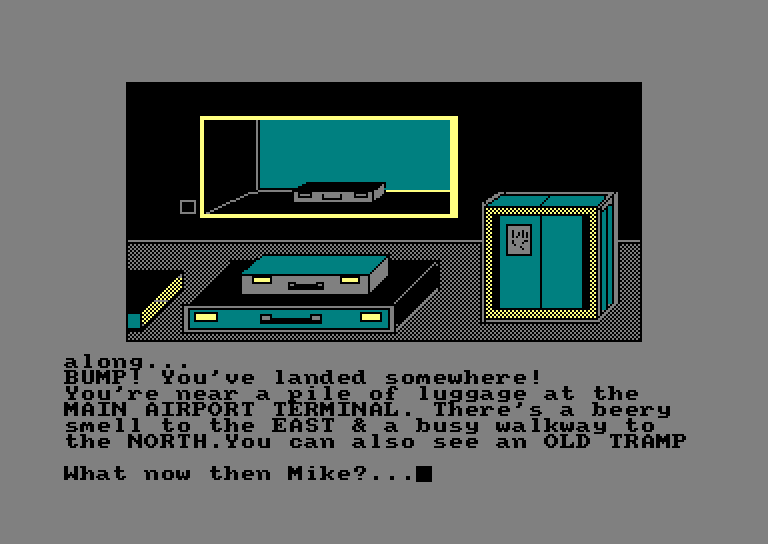
The adventure genre is what started me off with gaming – or at least when it came to home computers – but there are a couple of things that I always found frustrating with them. And unfortunately these are both present in Spy Trek Adventure. One that happened early on in this (and something I noticed recently in Questprobe: Spideman and The Hitch Hiker’s Guide To The Galaxy) was the need to repeat commands a number of times to solve a puzzle. When you encounter any puzzle like this it does make you wonder what the author is thinking. After you enter a command once and nothing happens, you immediately think you need to do something else to solve the puzzle and you just end up wasting time or screaming out for a hint or two – which most games aren’t willing to offer. Then there’s the other issue…
Save Save Save!
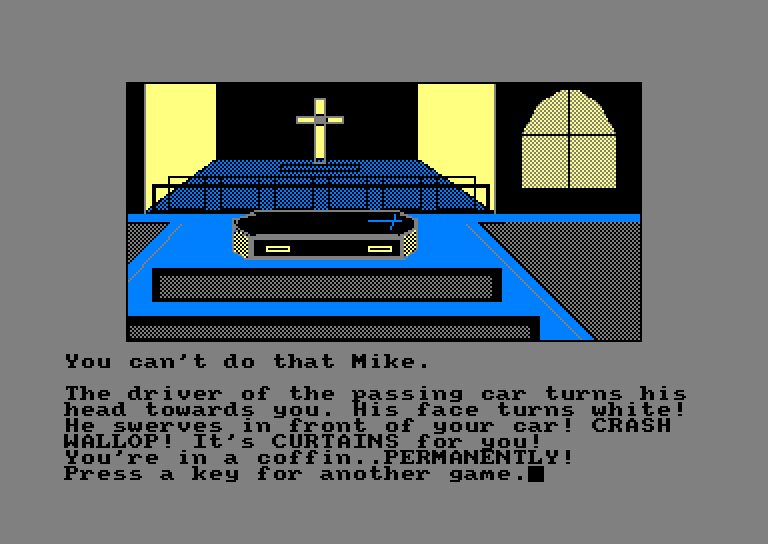
One thing I can’t stress enough with Spy Trek Adventure is that the save feature will quickly become your best friend on your quest. While I didn’t encounter any locations where walking into them lead to instant death (one of my pet hates with interactive fiction), there were numerous instances where player demise happened very quickly in some locations if you couldn’t solve a key puzzle quickly. In fact, once you solve the game’s first puzzle you only have a few moves to figure out what you need to do to solve the next one or it’s game over.
Now, I don’t mind games that kill players off if you do something that warrants it, but taking a couple of moves too many and having events take place that are beyond your control just makes the game punishing on the player when it doesn’t need to be. Each time you enter a command, it’s classed as making a move and if you’re struggling to find the right words to do something and die as a result it’s simply not fair.
Playability
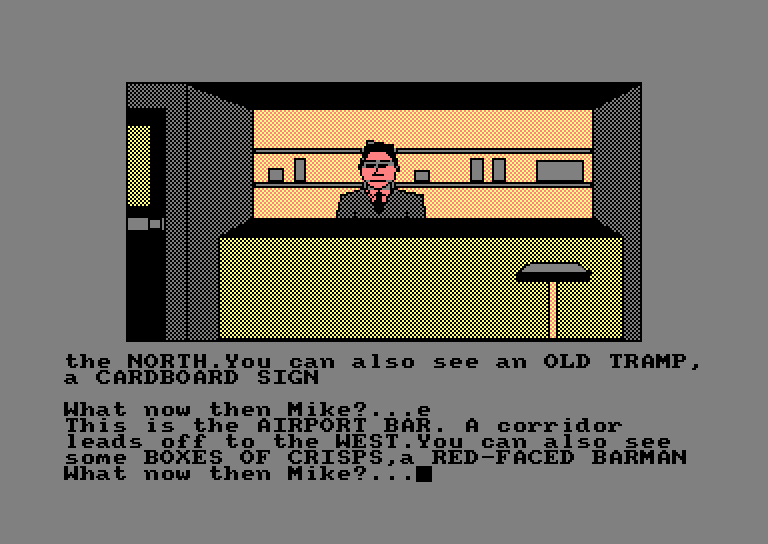
But most of this is all technical issues and a lot has little or no bearing on the gameplay itself. Despite the odd spelling mistake here and there, the descriptions are well written and give you a good sense of what’s going on in each of the quite varied locations for the game. In fact, I’d say they’re strong enough that you could even opt to turn the graphics off if you wished (which would also speed the game up).
Even though some of the puzzles are repetitive and a little frustrating, especially where unexpected death occurred too frequently, it’s a fun and challenging adventure and you’ll find yourself eager to keep playing to see what awaits. Truthfully, I think the variety in the locations really helps there as well so you don’t get bored of the clichéd never ending corridors, open forests, roads and so on that seem to fill other games so often.
Presentation
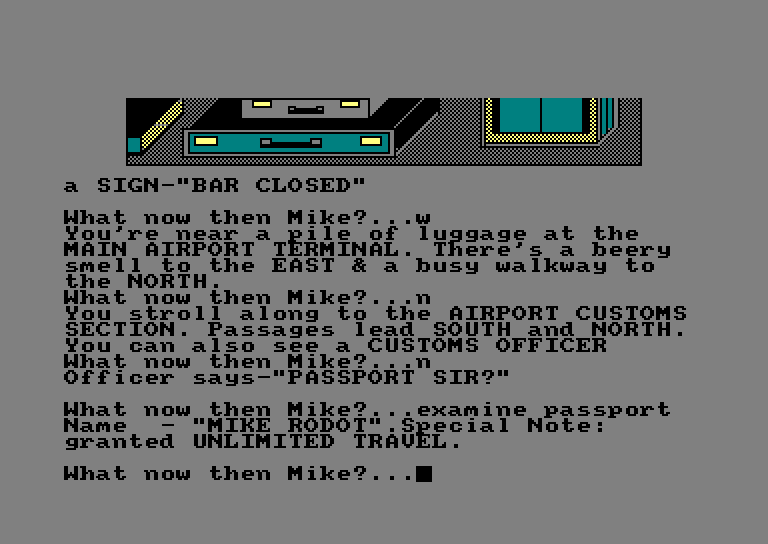
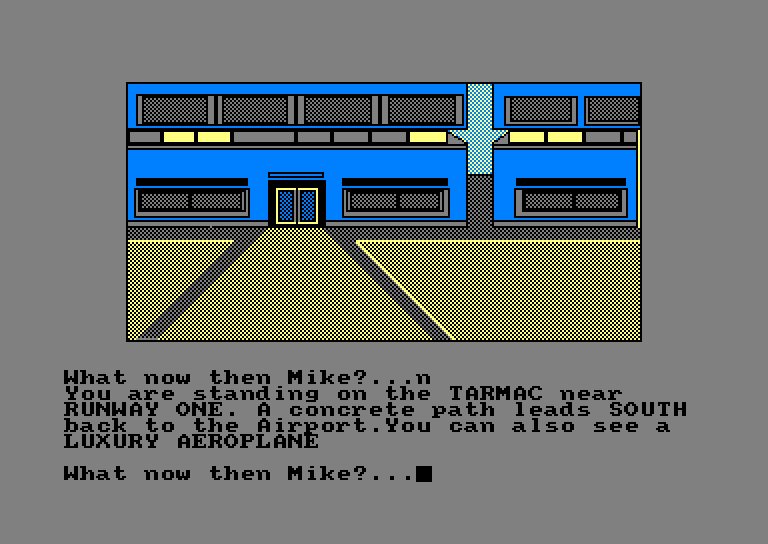
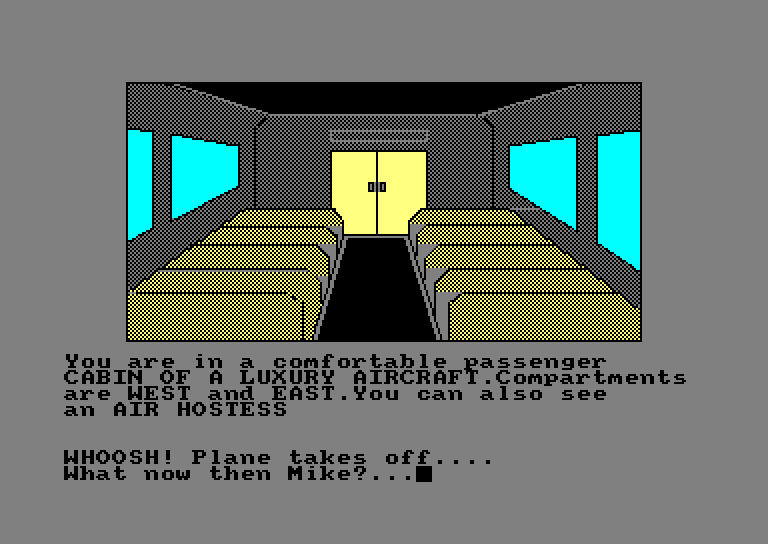
I won’t talk about graphics and sound for Spy Trek Adventure, but rather the game’s presentation as it’s unfair to comment on sound when it has none. The screen layout itself follows the same structure as most games developed using the Graphic Adventure Creator with the illustration at the top and the text panel underneath. The graphics for each location take a few seconds to draw each time, but this is down to the game engine itself as images were created in GAC using a line drawing method rather than a traditional paint tool to save memory. It has to be said that the images themselves aren’t particularly fantastic, but considering the tools at his disposal, they do the job.
Also, some of the text can be a little cramped on screen as it’s not as spaced out as games developed using custom engines, but again this is another quirk of the GAC engine and there wasn’t anything that Peter Torrance could do to change that. You get location descriptions, user commands and responses all packed together and it can be difficult to read, but you do get used to it quickly enough.
Overall
Unlike some, I don’t have any complaints about games being released commercially that were produced using the Graphic Adventure Creator – afterall, I dabbled with the package myself. I genuinely enjoyed playing Spy Trek Adventure, even if some of the puzzles were a bit frustrating or illogical at first. It’s not perfect, and the quick deaths and repetitive nature of some of the problems does destract from what could have been a bigger success but as a budget release it’s still worth giving it a try. Adventure fans won’t be disappointed.
* * *
You know what we think but why not share your thoughts on this game! Let us know what you think of it in the comments below, or add your own score using the slider in the summary box at the top of the review!


Leave a Reply